
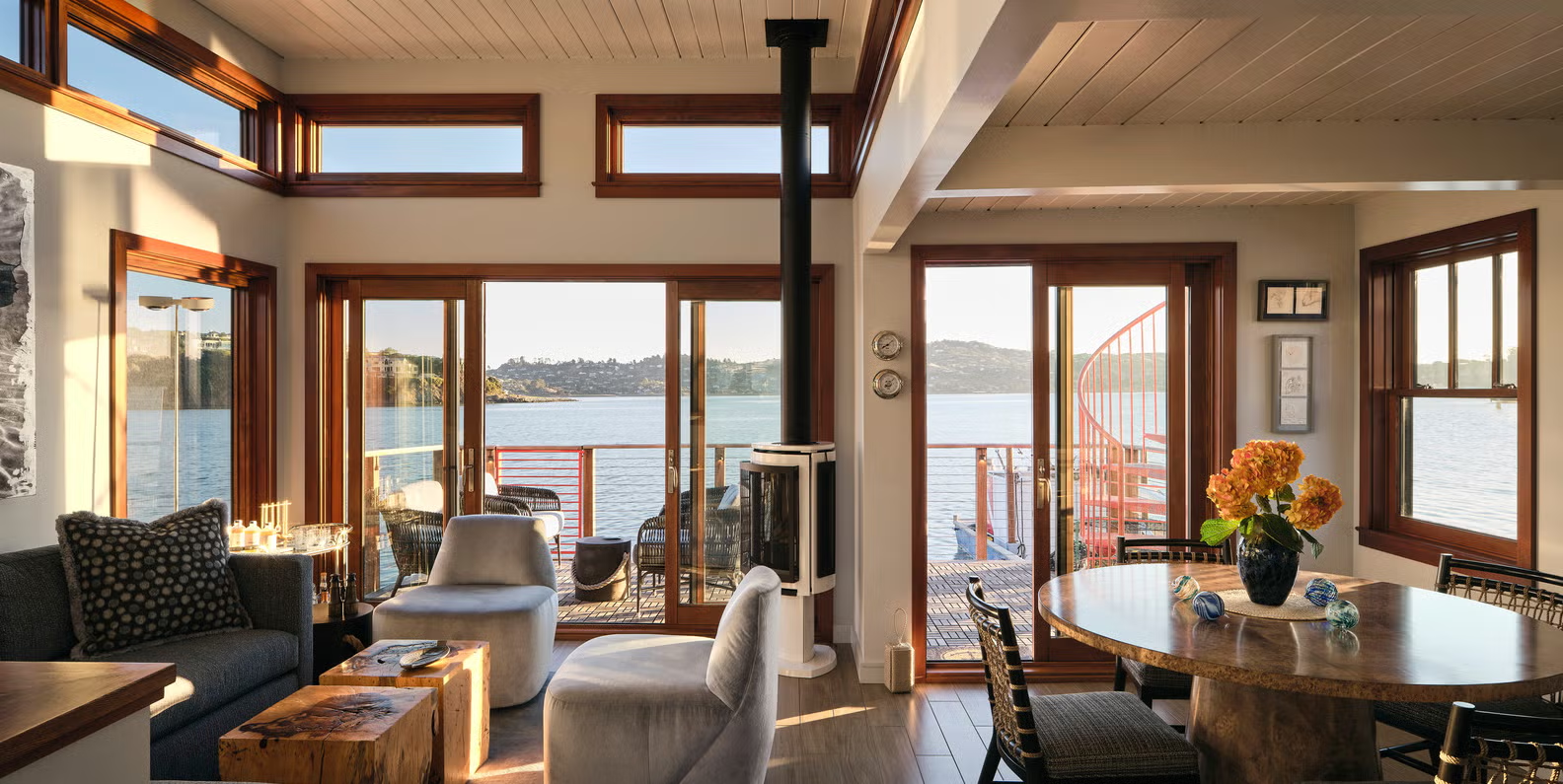
Window casing can make an ordinary opening feel intentional, finished, and tied to the architecture of the room. The strongest window casing ideas don’t depend on heavy ornament. They use proportion, profile, color, and alignment to give windows enough visual weight without making the surrounding wall feel crowded.
Why Window Casing Changes the Whole Room
Casing creates a clear boundary between the window and the wall. Without that definition, even an attractive window can appear flat, especially in rooms with simple drywall returns or large uninterrupted wall surfaces.
The effect becomes stronger when casing relates to other trim. Door surrounds, baseboards, ceiling details, and built-ins can share similar proportions without needing identical profiles.
Use Proportion Before Ornament
A wider casing often gives tall windows more presence, while narrow trim can suit compact rooms or restrained interiors. Width should respond to the size of the opening rather than following one standard measurement throughout every house.
Choose a Profile That Fits the Architecture
Flat stock creates crisp edges and suits transitional, modern farmhouse, and contemporary rooms. Molded profiles add shadow lines that work well in traditional interiors, but too many curves can make smaller openings look visually heavy.
People gathering fireplace-focused design references and other room ideas can use the same principle: architectural features look more convincing when their detailing shares a similar level of formality.
A simple casing with one subtle backband can create more depth than an elaborate molding stack. That is often enough to give a window character without turning it into the dominant feature.
Coordinate Casing With Nearby Trim
Consistency matters more than exact matching. Window casing can be slightly wider than door trim while still sharing the same edge profile, paint finish, or reveal.
Browsing interior architecture references alongside your own room photos can also help you notice how trim relates to wall height, furniture scale, and ceiling details rather than judging the window in isolation.
| Casing Choice | Visual Effect | Watch For |
|---|---|---|
| Flat wide boards | Strong, clean frame | Can overpower small windows |
| Slim square trim | Light, modern look | May disappear on large walls |
| Molded profile | Traditional depth | Too much detail in tight rooms |
| Backband detail | Added shadow and dimension | Extra thickness near curtains |
Use Paint Contrast With Restraint
White casing against colored walls remains popular because the contrast makes the opening easy to read. A softer approach is to paint the casing only a shade lighter or darker than the wall.
Dark trim can create striking depth around large windows, particularly when the frames are already dark. Looking at broader architectural inspiration can be useful when thinking about how window shapes and trim proportions relate to the character of the building as a whole.
Tone-on-tone casing is another option. It keeps the wall calm while allowing the profile and natural shadow lines to provide definition.
Where Window Casing Often Goes Wrong
One common mistake is making every piece of trim compete for attention. Heavy casing, ornate crown molding, tall baseboards, and detailed doors can quickly create visual noise when they all have strong profiles.
Another problem is ignoring curtains and shades. Deep casings can interfere with inside-mounted treatments, while projecting decorative elements may conflict with curtain rods. Measure those relationships before choosing the final profile.
Uneven reveals also become obvious around windows. Clean installation usually contributes more architectural character than adding another layer of molding.
Frequently Asked Questions
Should window casing match door casing?
It doesn’t have to be identical, but the two should usually share at least one feature such as profile, thickness, paint color, or general proportion. That connection keeps the trim package feeling intentional.
Can modern rooms use wide window casing?
Yes. Wide casing can look distinctly modern when the boards are flat, square-edged, and free of decorative molding. The width provides architectural emphasis while the simple profile keeps the result clean.
Is dark window casing suitable for small rooms?
It can be, especially when the room has enough natural light. Dark casing creates a stronger outline, so pairing it with restrained furnishings and quieter wall finishes can keep the room from feeling overly segmented.
Let the Window Shape Lead
Start with the window’s size, location, and relationship to nearby trim before choosing decorative details. Strong window casing ideas work because proportion does most of the design work. Select a profile that supports the room, confirm it works with window treatments, and keep installation lines precise. The result can feel architectural without becoming ornate.