
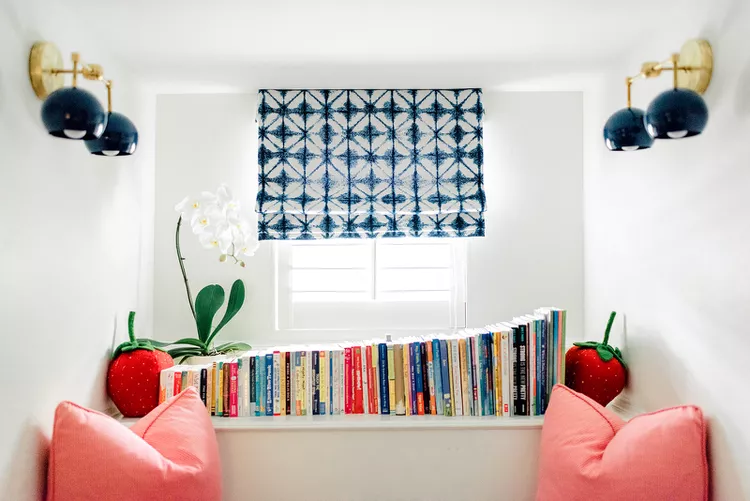
A good family reading corner needs to work for more than quiet story time. It should feel inviting to a preschooler, remain useful when school books arrive, and fit naturally into everyday family life. The strongest reading corner ideas combine comfort, reachable storage, flexible seating, and enough visual calm to make books easier to enjoy.
Start With a Spot Children Will Actually Use
Choose a place that already feels comfortable rather than forcing a reading zone into an awkward leftover corner. A window, bedroom alcove, upstairs landing, or quiet section of the living room can work well if children can reach it without moving furniture.
Natural light is helpful, but glare matters. A seat beside a window may need a shade or curtain so bright afternoon sun doesn’t make illustrated pages difficult to see.
Keep the scale child-friendly
Young children respond well to spaces designed around their height. Low shelves, floor cushions, small chairs, and front-facing books make the corner feel like something they can control themselves.
Build Comfort Without Filling the Floor
Soft seating doesn’t require a giant beanbag. A washable rug with two firm cushions may provide enough comfort while leaving room for siblings to sit together.
Families comparing layouts and broader property-planning ideas may also come across residential space references while thinking about how individual rooms fit into the household as a whole. Inside the reading corner itself, focus on pieces that can be moved or removed as children grow.
A small upholstered bench is another useful choice because it provides seating without creating the loose clutter that can come with several floor pillows.
Make Book Storage Easy to See
Children are more likely to browse when covers are visible. Front-facing ledges work especially well for picture books, while traditional shelves become more useful once chapter books and school reading begin to accumulate.
Keep the most-used books between knee and shoulder height for the child using the space. Less frequently used books can sit higher, while baskets underneath can hold oversized books or magazines.
Families gathering ideas for flexible home environments sometimes browse land and home planning resources alongside interior inspiration. The same long-term thinking applies here: avoid built-ins that only suit one age unless you know they can later be adapted.
| Feature | Works Well For | Long-Term Benefit |
|---|---|---|
| Front-facing ledges | Picture books | Easy browsing |
| Low bookcase | Mixed ages | Grows with collections |
| Storage bench | Small rooms | Seating plus storage |
| Floor basket | Oversized books | Fast cleanup |
Add Lighting That Supports Real Reading
Overhead lighting alone can create shadows when children lean over books. Add a wall lamp, clamp light, or stable floor lamp that directs light toward the reading area.
Cord placement deserves attention in shared family spaces. Keep cords away from walking routes, and choose fixtures that won’t easily tip if a child reaches behind a chair or cushion.
What Reading Corners Often Get Wrong
A beautiful setup can fail when it becomes too decorative. Too many pillows, stuffed animals, signs, canopies, and accessories may leave almost no usable room for reading.
The opposite problem is making the area feel like classroom furniture at home. Design ideas connected with outdoor and spatial planning can be a useful reminder that successful spaces usually balance structure with breathing room. A reading corner should have enough personality to attract children without becoming visually exhausting.
Frequently Asked Questions
How much space does a children’s reading corner need?
Even a small area beside a bookcase can work. Enough room for one comfortable seat, accessible books, and safe lighting is more important than having a large dedicated nook.
Should a reading corner be in a child’s bedroom?
Not necessarily. Living rooms, hallways, playrooms, landings, and family rooms can work well when the location is reasonably quiet and books can remain organized.
What seating grows best with children?
A storage bench, compact armchair, or floor cushion setup usually adapts better than tiny children’s furniture that may become uncomfortable within only a few years.
Design It for the Next Stage Too
The most useful reading corner isn’t frozen around one childhood phase. Start with reachable books and comfortable seating, then choose storage and lighting that can support homework, independent reading, and larger book collections later. A few adaptable pieces usually outperform an elaborate themed setup. Build a place children enjoy now without making the family redesign it every time they grow.